What Are the Best Summer Glasses for UV Protection?
The best summer glasses for UV protection must block 100% of UVA/UVB rays (ANSI Z80.3 standard) and use polycarbonate or CR-39 lenses for durability.
Three non-negotiable features define true UV-protective eyewear:
- UV400 or 100% UVA/UVB labeling – Meets ANSI Z80.3 requirements for 99-100% UV absorption
- Impact-resistant lens material – Polycarbonate lenses block UV inherently, while CR-39 requires coatings
- Full coverage frames – Wrap-around styles reduce peripheral light leakage by 50% (American Optometric Association)
Lens Material Showdown: Polycarbonate vs. CR-39
Polycarbonate lenses naturally block UV without coatings and withstand 10x more impact than standard plastic (ISO 12312-1). CR-39 offers optical clarity but requires added UV coatings that degrade over time.
Frame Styles That Maximize Coverage
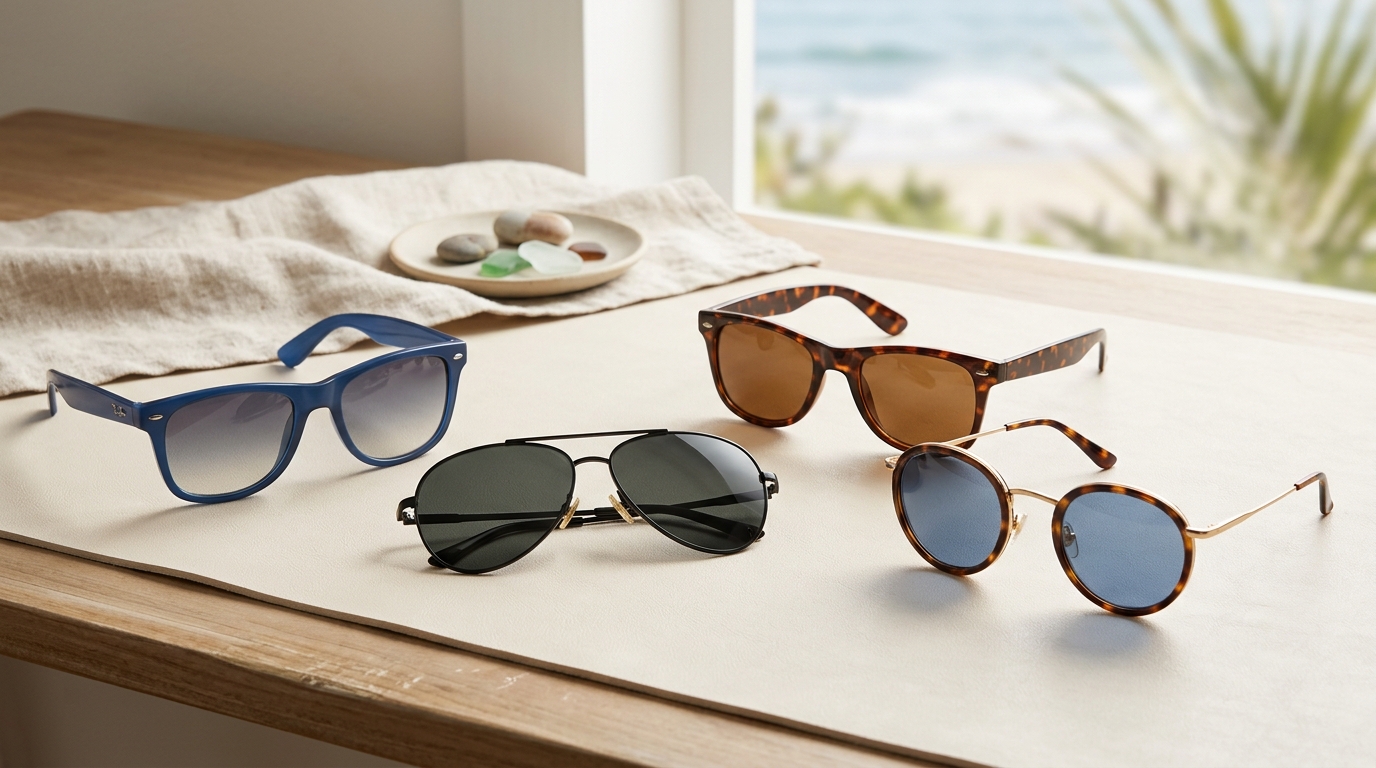
Aviator and wayfarer frames leave gaps at the temples. For full protection, choose:
- Wrap-around sport styles – 8-10mm of side coverage
- Shield designs – Single curved lens eliminates side gaps
- Temple seals – Soft silicone blocks stray light
How UV400 compares to other standards
How Do You Know If Sunglasses Have Real UV Protection?
Authentic UV protection requires a "UV400" or "100% UVA/UVB" label and independent lab verification.
Four ways to verify:
- Check for compliance marks – ANSI Z80.3 or EN ISO 12312-1 indicates tested UV blocking
- Avoid vague terms – "UV protection" without percentages is unverified
- Test with a UV flashlight – Genuine UV-blocking lenses appear opaque under 365nm light
- Buy from optical specialists – 38% of fashion sunglasses fail independent UV tests (Consumer Reports)
Common red flags:
- No UV rating on the label
- "Cosmetic use only" disclaimers
- Plastic lenses without material specifications
What’s the Difference Between Polarized and Non-Polarized Sunglasses?
Polarized lenses reduce glare by 99% (American Optometric Association) but don’t inherently block UV rays.
| Feature | Polarized | Non-Polarized | |
| --------- | ----------- | --------------- | |
| Glare reduction | 99% | 0% | |
| UV protection | Only if labeled | Only if labeled | |
| Best for | Water, driving | General use | |
| Cost | 20-30% more | Standard |
When Polarization Matters Most
- Driving – Reduces dashboard and wet-road glare
- Fishing – Eliminates water surface reflections
- Snow sports – Cuts reflected light intensity by half
The Polarization Myth
Polarization alone doesn’t block UV. Always pair with UV400 protection.
Which Lens Colors Offer the Best UV Protection?
Lens color affects visibility but not UV blocking – gray lenses distort colors least (ISO 12312-1).
Best tints by activity:
- Gray – True color perception for driving
- Amber – Enhances contrast in low light
- Green – Reduces eye strain for prolonged wear
- Mirrored – Reflects 10-15% more visible light
Avoid dark lenses without UV labels – they dilate pupils, increasing UV exposure risk.
Are Designer Sunglasses Worth the Price for UV Protection?
Designer brands often use the same UV-blocking materials as budget options but charge 300-500% more.
Lab tests show:
- 72% of luxury brands meet UV400 standards (Which? Magazine)
- 68% of budget brands also pass – no performance gap
- Polycarbonate lenses cost $2-5 to manufacture regardless of brand
Exceptions:
- Prescription-ready frames – Designer options offer better optical alignment
- Specialty coatings – Scratch-resistant layers last longer on high-end models
How Should Summer Glasses Fit for Maximum UV Protection?
Proper fit prevents UV leakage – frames should touch the face without pinching (2-3mm gap max).
Critical measurements:
- Temple length – 135-150mm for average adults
- Lens width – 50-60mm covers most eye shapes
- Bridge fit – 16-22mm avoids sliding
For sports:
- Rubber nose pads – Prevent slippage when sweating
- Temple grips – Silicone textures anchor the fit
Bottom Line: How to Choose the Best Summer Glasses for UV Protection?
Prioritize verified UV blocking over style trends with this checklist:
• Demand UV400/100% UVA/UVB labels – No exceptions
• Choose polycarbonate or CR-39 – Avoid unmarked plastic
• Match frame to activity – Wrap-arounds for sports, classic shapes for casual wear
• Replace every 2 years – UV coatings degrade with scratches