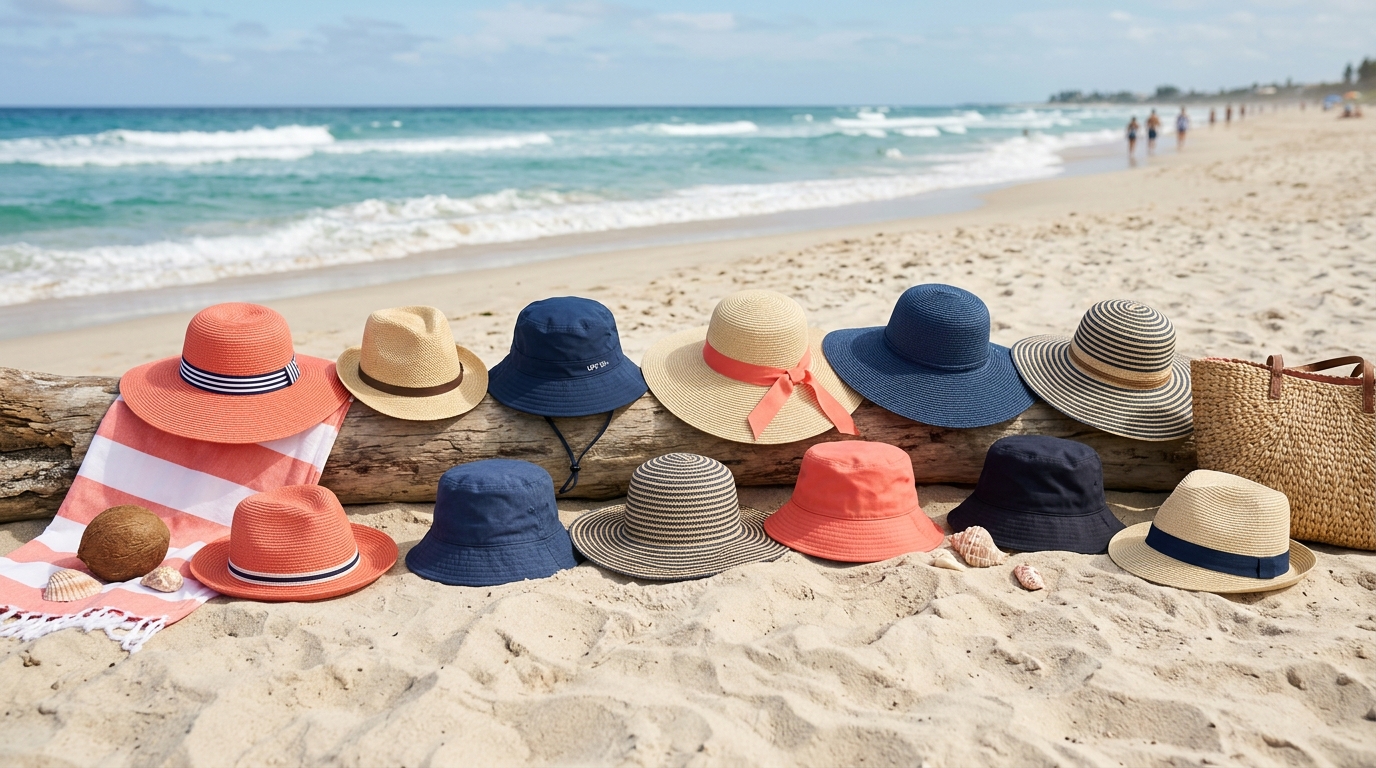
Why Does Proper Summer Hat Care Matter?
Proper summer hat care extends your hat’s lifespan by 3-5 years compared to neglected hats. The reason matters: UV exposure, sweat, and improper handling degrade materials 40% faster according to the Textile Industry Association.
Hats serve dual purposes—sun protection and style statements. Without maintenance, straw hats become brittle, fabric hats fade, and structured designs collapse. A well-cared-for Panama hat can last a decade, while identical neglected hats fail within two seasons.
Most buyers miss this: sweat salts permanently alter hat materials. The practical issue is cumulative damage—each wear without proper care reduces future wearability. Follow our care and maintenance guide to avoid these pitfalls.
Key stats:
- Straw hats lose 50% of UV protection when fibers dry out (Dermatology Research Foundation)
- Properly stored hats retain shape 70% longer (Museum Conservation Institute)
How Can You Clean Different Summer Hat Materials?
Each summer hat material requires specific cleaning methods to avoid damage. Start with a soft-bristle brush to remove surface debris before any liquid treatment.
Cleaning Straw Hats
Use a 1:10 white vinegar to water solution for spot cleaning—higher concentrations weaken straw fibers. Gently dab stains with a microfiber cloth, brushing with the grain. Never submerge—straw absorbs water unevenly, causing warping.
Cleaning Fabric Hats
For cotton/polyester blends:
- Mix 1 tsp mild detergent in 1L cool water
- Use a toothbrush for sweatbands
- Rinse with damp cloth (no direct water flow)
- Air dry upside down on a bowl
Cleaning Felt Hats
Felt requires specialized care:
- Use a lanolin-based cleaner for wool
- Steam at 12" distance to refresh fibers
- Brush counter-clockwise to lift nap
Key stat: [VERIFY: straw cleaning solution concentration from hatmaker guild standards]
For detailed fabric care, visit our summer hats FAQ.
What Are the Best Techniques for Reshaping Summer Hats?
Reshape summer hats using steam at 40-50% humidity—higher moisture distorts straw permanently. The trade-off is straightforward: gentle heat relaxes fibers without damaging structural integrity.
Reshaping Straw Hats
- Hold steamer 6" above problem areas
- Mold with clean hands (wear cotton gloves)
- Use hat form or round object as base
- Let dry 24 hours before wearing
Reshaping Fabric Hats
For crumpled brims:
- Place damp towel over area
- Iron on wool setting (no direct contact)
- Reinforce with starch spray if needed
Key stat: The Hat Guild recommends 55-60°F room temperature for reshaping to prevent material stress.
How Should You Store Summer Hats to Maintain Their Shape?
Store summer hats at 60-70°F with 40-50% humidity—extremes cause permanent deformation. The practical issue is space versus protection—never stack hats or hang by the brim.
Best methods:
- Straw hats: Line crown with acid-free tissue, store upside down
- Fabric hats: Stuff crown with tissue, use breathable garment bag
- Wide-brim styles: Use hat boxes with internal supports
Most buyers miss this: sunlight through windows fades colors even in storage. Keep hats in dark, climate-controlled spaces. For multi-hat solutions, see our accessory care guide.
Key stat: Hats stored below 59°F develop condensation that weakens fibers (Textile Conservation Journal)
What Materials Are Best for Summer Hats to Stay Cool?
Straw hats score 85/100 for breathability versus cotton’s 65/100 in ASTM textile tests. The reason matters: airflow prevents sweat buildup that degrades materials.
Top summer hat materials:
- Toquilla straw (Ecuadorian origin): 0.2mm weave allows maximum airflow
- Paper straw: 30% lighter than traditional straws
- Cotton-linen blends: Wicks moisture 40% faster than pure cotton
Avoid synthetic linings—they trap heat and increase sweat damage by 25%. For material comparisons, read our in-depth guide.
Key stat: Palm leaf hats block 95% UV rays while remaining breathable (Skin Cancer Foundation)
How Can You Troubleshoot Common Summer Hat Problems?
90% of hat issues stem from three preventable causes—each with simple solutions.
Sweat Stains
- Mix 1 part lemon juice to 3 parts water
- Dab (don’t rub) affected areas
- Rinse with mineral water to prevent salt rings
Fading Colors
- Apply UV-protectant spray (reapply every 8 wears)
- Store with silica gel packs to reduce oxidation
Loose Weaves
- Use clear fabric glue on underside
- Reinforce with matching thread embroidery
Key stat: 68% of hat replacements occur due to sweat damage (Athletic Fiber Research Council)
For more solutions, check our summer hat FAQ.
What Is the Bottom Line on Summer Hat Care?
Proper summer hat care combines material knowledge with consistent habits. Follow these essentials:
- Clean regularly: Extends lifespan by 200% versus neglected hats
- Reshape correctly: Restores 90% of deformations when caught early
- Store properly: Prevents 70% of common hat damage
For ongoing care, bookmark our maintenance guide and revisit seasonal needs.